 18:35
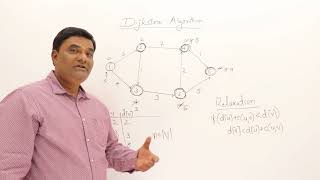
18:35 3.6 Dijkstra Algorithm - Single Source Shortest Path - Greedy Method Abdul Bari
4.6M views · 72.1K likes · 8 years ago
Recursion is when a function calls itself to solve a problem by breaking it into smaller subproblems. Every recursive function has a base case (when to stop) and a recursive case (how to break down the problem). It naturally solves problems with self-similar structure: trees, fractals, nested data.
Factorial: factorial(5) = 5 * factorial(4) = 5 * 4 * factorial(3) ... until factorial(1) = 1 (base case). File system traversal: to list all files, list files in the current directory, then recursively list files in each subdirectory.
Recursive thinking: if you can solve the problem for n-1, can you use that to solve it for n? That's recursion. Tree traversal, merge sort, quicksort, and many graph algorithms are naturally recursive.
18:35  36:54
36:54  48:57
48:57  8:26
8:26 
@gatesmashers
Welcome to Gate Smashers, one of the fastest-growing EdTech communities with 2.6 M+ learners. 🎓 We provide complete lec...

@neetcode
Current NEET and ex-Google SWE, also I love teaching! N.E.E.T. = (Not in education, employment or training) Preparing ...

@neuralnine
NeuralNine is an educational brand focusing on programming, machine learning and computer science in general! Let's deve...

@greghogg
Today, Greg is driven by a single mission: to help engineers master the complex technical skills required to land roles ...
Any recursive solution can be written iteratively (using loops and a stack). Recursion is more elegant for tree/graph problems. Iteration is usually faster and uses less memory. Use whichever is clearer.
Ask: what's the simplest case I can solve directly? (base case). Can I express the solution in terms of a smaller version of the same problem? (recursive case).
Want a structured learning path?
Plan a Recursion Lesson →