 18:35
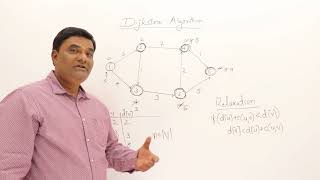
18:35 3.6 Dijkstra Algorithm - Single Source Shortest Path - Greedy Method Abdul Bari
4.9M views · 76.1K likes · 8 years ago
Dynamic programming (DP) solves complex problems by breaking them into overlapping subproblems and storing their solutions to avoid redundant computation. Instead of recalculating fibonacci(5) three times in a recursive tree, compute it once and cache the result. DP turns exponential algorithms into polynomial ones.
Fibonacci without DP: O(2^n) — recalculates the same values repeatedly. With DP (memoization): O(n) — calculate each value once, store in an array. fib(50) goes from billions of operations to 50 operations.
Classic DP problems: longest common subsequence, knapsack problem, coin change, edit distance, and many LeetCode problems. The pattern: define subproblems, write the recurrence relation, add memoization or build bottom-up.
18:35  36:54
36:54  48:57
48:57  8:26
8:26 
@apnacollegeofficial
ApnaCollege is where Tech Education meets Real-world needs. Started with a vision to provide ‘Quality’ & ‘Practical’ le...

@gatesmashers
Welcome to Gate Smashers, one of the fastest-growing EdTech communities with 2.6 M+ learners. 🎓 We provide complete lec...

@nareshit
Welcome to the Official Naresh IT YouTube Channel – Your Gateway to IT Career Success! Naresh IT is one of India’s lead...

@geeksforgeeksvideos
Welcome to the Official Channel of GeekforGeeks, your one-stop destination for diverse tech education! 🚀 Tech Variety:...
Ask: can I break this into overlapping subproblems? Is there a recurrence relation? Does the problem ask for optimization (min/max) or counting? If yes, try DP.
DP has a learning curve. Start with 1D problems (climbing stairs, coin change), then 2D (grid paths, longest common subsequence). Practice recognizing patterns rather than memorizing solutions.