 18:35
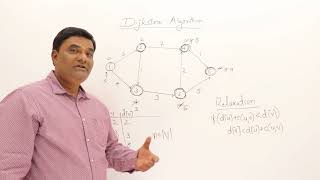
18:35 3.6 Dijkstra Algorithm - Single Source Shortest Path - Greedy Method Abdul Bari
4.9M views · 76.1K likes · 8 years ago
Linked List Data Structure
A linked list stores elements as nodes where each node points to the next. Unlike arrays, elements aren't contiguous in memory — insertion and deletion are O(1) at known positions (no shifting needed), but accessing the nth element requires traversing from the head: O(n).
Singly linked: each node has data + pointer to next. Doubly linked: each node also points to previous (enables reverse traversal). Used in: browser history (back/forward), undo systems, LRU caches, and as building blocks for stacks and queues.
18:35  36:54
36:54  48:57
48:57  8:26
8:26 
@apnacollegeofficial
ApnaCollege is where Tech Education meets Real-world needs. Started with a vision to provide ‘Quality’ & ‘Practical’ le...

@gatesmashers
Welcome to Gate Smashers, one of the fastest-growing EdTech communities with 2.6 M+ learners. 🎓 We provide complete lec...

@nareshit
Welcome to the Official Naresh IT YouTube Channel – Your Gateway to IT Career Success! Naresh IT is one of India’s lead...

@geeksforgeeksvideos
Welcome to the Official Channel of GeekforGeeks, your one-stop destination for diverse tech education! 🚀 Tech Variety:...
Arrays for indexed access and iteration. Linked lists for frequent insertion/deletion at arbitrary positions. In practice, arrays (and dynamic arrays like ArrayList) are almost always faster due to CPU cache locality.