 18:35
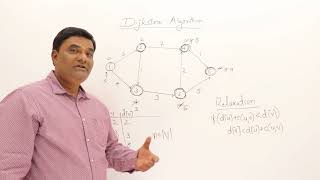
18:35 3.6 Dijkstra Algorithm - Single Source Shortest Path - Greedy Method Abdul Bari
4.6M views · 72.1K likes · 8 years ago
Linked List Data Structure
A linked list stores elements as nodes where each node points to the next. Unlike arrays, elements aren't contiguous in memory — insertion and deletion are O(1) at known positions (no shifting needed), but accessing the nth element requires traversing from the head: O(n).
Singly linked: each node has data + pointer to next. Doubly linked: each node also points to previous (enables reverse traversal). Used in: browser history (back/forward), undo systems, LRU caches, and as building blocks for stacks and queues.
18:35  36:54
36:54  48:57
48:57  8:26
8:26 
@gatesmashers
Welcome to Gate Smashers, one of the fastest-growing EdTech communities with 2.6 M+ learners. 🎓 We provide complete lec...

@neetcode
Current NEET and ex-Google SWE, also I love teaching! N.E.E.T. = (Not in education, employment or training) Preparing ...
@neuralnine
NeuralNine is an educational brand focusing on programming, machine learning and computer science in general! Let's deve...

@greghogg
Today, Greg is driven by a single mission: to help engineers master the complex technical skills required to land roles ...
Arrays for indexed access and iteration. Linked lists for frequent insertion/deletion at arbitrary positions. In practice, arrays (and dynamic arrays like ArrayList) are almost always faster due to CPU cache locality.
Want a structured learning path?
Plan a Linked List Lesson →