 18:35
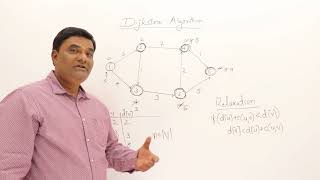
18:35 3.6 Dijkstra Algorithm - Single Source Shortest Path - Greedy Method Abdul Bari
4.6M views · 72.1K likes · 8 years ago
A data structure is a way of organizing and storing data for efficient access and modification. Arrays, linked lists, hash tables, trees, and graphs are fundamental data structures. Choosing the right data structure determines whether an operation takes microseconds or minutes.
Array: O(1) access by index, O(n) search. Hash table: O(1) average lookup by key. Tree: O(log n) sorted operations. Linked list: O(1) insertion at head. Each data structure excels at different operations — choosing the right one is a core programming skill.
Real-world mapping: JavaScript Array for ordered collections, Map/Object for key-value lookup, Set for unique values, and custom trees/graphs for hierarchical or network data.
Every programmer uses data structures daily — arrays, objects, maps, sets. Understanding their performance characteristics (when to use a Map vs an Array for lookups) separates efficient code from slow code.
// Hash Map — O(1) lookup
const users = new Map();
users.set('alice', { role: 'admin' });
users.get('alice'); // O(1) lookup

// Stack — LIFO
const stack = [];
stack.push('a'); stack.push('b');
stack.pop(); // 'b' — last in, first out

// Queue — FIFO
const queue = [];
queue.push('task1'); queue.push('task2');
queue.shift(); // 'task1' — first in, first out

// Set — unique values, O(1) has()
const seen = new Set();
seen.add('url1'); seen.add('url2');
seen.has('url1'); // true — O(1) check 36:54
36:54  48:57
48:57  8:26
8:26  18:56
18:56  17:12
17:12 
@gatesmashers
Welcome to Gate Smashers, one of the fastest-growing EdTech communities with 2.6 M+ learners. 🎓 We provide complete lec...

@neetcode
Current NEET and ex-Google SWE, also I love teaching! N.E.E.T. = (Not in education, employment or training) Preparing ...
@neuralnine
NeuralNine is an educational brand focusing on programming, machine learning and computer science in general! Let's deve...

@greghogg
Today, Greg is driven by a single mission: to help engineers master the complex technical skills required to land roles ...
@csengineeringgyan
CS Engineering Gyan (CSE GYAN) is a channel that is all about providing clear knowledge of various subjects(i.e Data Str...

@codingseekho
C Programming in Hindi, Core Java in Hindi, Python in Hindi, Data structure in hindi, c++ in hindi program by Vikas Sing...
Arrays, hash tables (objects/maps), stacks, and queues. These cover 90% of real-world programming. Then learn trees and graphs for interviews and specialized problems.
Yes. JavaScript Arrays and Objects are data structures with different performance characteristics. Using an Array for lookups when a Map would be O(1) is a common performance mistake.
Want a structured learning path?
Plan a Data Structure Lesson →