 17:56
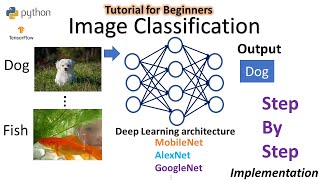
17:56 Image Classification using CNN Keras | Full implementation Learn With Jay
242.4K views · 5.6K likes · 4 years ago
Artificial Neural Network
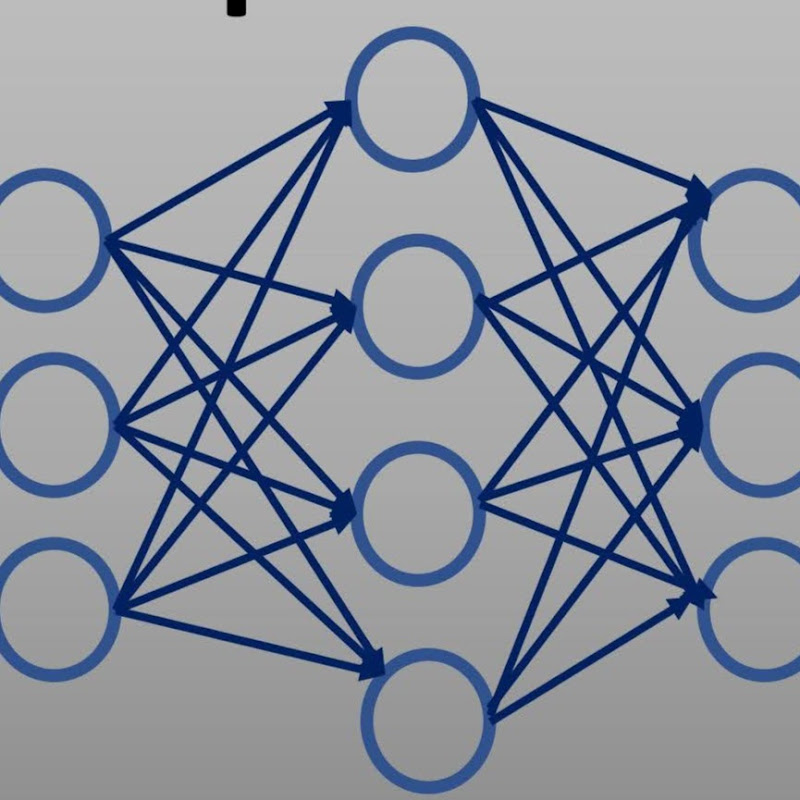
A neural network is a computing system inspired by the human brain, consisting of layers of interconnected nodes (neurons) that process data. Each connection has a weight that's adjusted during training. Neural networks learn to recognize patterns, classify data, and make predictions.
A neural network has three parts: input layer (receives data), hidden layers (process and transform), and output layer (produces results). Each neuron applies a weight, adds a bias, and passes through an activation function. Training adjusts all weights to minimize prediction errors.
Simple neural networks with 1-2 hidden layers handle tasks like spam detection and price prediction. Deep networks with dozens of layers handle complex tasks like image recognition (CNNs), language understanding (Transformers), and game playing (reinforcement learning).
Training a neural network means feeding it examples, comparing its predictions to correct answers, calculating the error (loss), and adjusting weights via backpropagation and gradient descent. This loop repeats millions of times until the model converges.
Neural networks power nearly every modern AI application: image recognition (photos, medical imaging), NLP (translation, chatbots), recommendation engines (Netflix, YouTube), autonomous vehicles, and game AI. Developers use frameworks like PyTorch and TensorFlow rather than building networks from scratch.
import tensorflow as tf

# Build a simple neural network
model = tf.keras.Sequential([
    tf.keras.layers.Dense(128, activation='relu', input_shape=(784,)),
    tf.keras.layers.Dropout(0.2),
    tf.keras.layers.Dense(64, activation='relu'),
    tf.keras.layers.Dense(10, activation='softmax')
])

model.compile(
    optimizer='adam',
    loss='sparse_categorical_crossentropy',
    metrics=['accuracy']
)

# Train
model.fit(X_train, y_train, epochs=10, validation_split=0.2) 1:19:27
  42:36
42:36  13:33
13:33  13:49
13:49  1:14:22
@tensorflow
Welcome to the official TensorFlow YouTube channel. Stay up to date with the latest TensorFlow news, tutorials, best pra...

@perfectwebsolutions
Perfect web solutions provides Quality Tutorials on Web Development, Web Design, using ( WordPress, Laravel, CodeIgniter...

@programming_hut
I make machine learning, deep learning project videos. So if you are a college student or learning machine learning then...
@deeplearning_by_phdscholar6925
This channel will contain tutorial videos regarding deep learning and computer vision concepts and implementation using ...

@antonbabenkolive
Your weekly dose of Terraform with news, reviews, Q&A, interviews, and live coding. PS: There is also Terraform Weekly ...

@techsimpluslearnings
Welcome to TechSimPlus Learnings - Your one-stop destination for mastering modern tech skills! WHAT YOU'LL LEARN: ✅ Ge...
Start simple. For tabular data, 2-3 hidden layers often suffice. For images, use pre-trained CNNs like ResNet. For text, use pre-trained Transformers. Adding more layers isn't always better — it can cause overfitting.
In theory, a sufficiently large neural network can approximate any function (universal approximation theorem). In practice, they're limited by data quantity, data quality, compute resources, and architecture choices.
A neural network is the model architecture. Deep learning is the practice of using deep (many-layer) neural networks. A 2-layer network isn't 'deep learning'; a 50-layer network is.
Want a structured learning path?
Plan a Neural Network Lesson →