 17:34
17:34 What Is Java?
Java Programming Language
Java is a statically typed, object-oriented programming language that runs on the Java Virtual Machine (JVM). It's the backbone of enterprise software, Android development, and large-scale backend systems. Java's 'write once, run anywhere' philosophy makes it platform-independent.
How Java Works
Java has been a top 3 language for 25+ years. It powers enterprise backends (banks, airlines, governments), Android apps, big data systems (Hadoop, Kafka, Spark), and gaming (Minecraft). Spring Boot is the dominant Java web framework.
Modern Java (17+) is much more pleasant than legacy Java. Records, pattern matching, sealed classes, text blocks, and var reduce boilerplate significantly. The JVM's JIT compiler makes Java very fast at runtime.
The JVM ecosystem extends beyond Java: Kotlin (Google's preferred Android language), Scala (functional programming), Groovy (scripting), and Clojure (Lisp on JVM) all run on the same platform.
Why Developers Use Java
Java is the default choice for large enterprise applications, banking systems, and Android development. It has the largest professional developer community and extensive tooling (IntelliJ IDEA, Maven, Gradle). If you want a career in enterprise software, learn Java.
Key Concepts
- JVM — The Java Virtual Machine — executes compiled Java bytecode on any platform. Also runs Kotlin, Scala, and Groovy.
- Spring Boot — The dominant Java web framework — handles dependency injection, REST APIs, security, and database access
- Garbage Collection — JVM automatically manages memory — multiple GC algorithms (G1, ZGC) optimized for different workloads
- Maven/Gradle — Build tools and dependency managers for Java projects — Maven uses XML, Gradle uses Groovy/Kotlin DSL
- Strong Typing — Every variable and return type is declared — catches errors early but adds verbosity
- Multithreading — Java has robust threading support with synchronized blocks, concurrent collections, and the virtual threads API
Spring Boot REST API
java
@RestController
@RequestMapping("/api/users")
public class UserController {

    @Autowired
    private UserService userService;

    @GetMapping("/{id}")
    public ResponseEntity<User> getUser(@PathVariable Long id) {
        return userService.findById(id)
            .map(ResponseEntity::ok)
            .orElse(ResponseEntity.notFound().build());
    }

    @PostMapping
    public ResponseEntity<User> createUser(@RequestBody @Valid UserDto dto) {
        User user = userService.create(dto);
        return ResponseEntity.status(HttpStatus.CREATED).body(user);
    }
}
Learn Java — Top Videos
17:34  1:02:34
 Java tutorial for complete beginners with interesting examples - Easy-to-follow Java programming Duckademy IT courses
1.1M views · 11.7K likes · 10 years ago
 14:54
14:54 Learn Java in One Video - 15-minute Crash Course Coding with John
955.1K views · 32.8K likes · 4 years ago
 13:05
13:05 Lambda Expressions in Java - Full Simple Tutorial Coding with John
921.9K views · 31.4K likes · 4 years ago
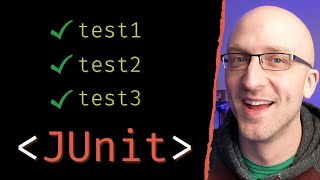 21:35
21:35 Java Unit Testing with JUnit - Tutorial - How to Create And Use Unit Tests Coding with John
866.7K views · 19.8K likes · 4 years ago
![Spring Boot Tutorial for Beginners [2025]](https://img.youtube.com/vi/gJrjgg1KVL4/mqdefault.jpg) 1:11:22
1:11:22 Spring Boot Tutorial for Beginners [2025] Programming with Mosh
807.7K views · 13.8K likes · 1 year ago
Java Educators

Jenny's Lectures CS IT
@jennyslecturescsit
Data Science
Warm Welcome to Jenny's Lectures. On This Channel we are focusing on creating tutorials for engineers, software develop...
2M Subs
886 Videos
28.5K Avg Views
1.16% Engagement

MySirG.com
@mysirgdotcom
CS
🎓 Welcome to MySirG.com – India’s Most Trusted Programming Classroom! 🇮🇳 🚀 Whether you’re a beginner or a budding d...
899K Subs
1.9K Videos
1.7K Avg Views
8.22% Engagement
Java Brains
@java.brains
Web Dev
Java and JavaScript Courses and Tutorials 1d80fd1a-078b-421b-b727-da890f5c0753
700K Subs
2K Videos
26.9K Avg Views
3.15% Engagement

Tutor Joe's Stanley
@tutorjoes
Web Dev
Welcome to Tutor Joe's Stanley, your premier destination for high-quality Computer Education and Software Training. Base...
535K Subs
3.1K Videos
921 Avg Views
1.74% Engagement

Coding with John
@codingwithjohn
CS
Hi, I'm John! I'm a Lead Java Software Engineer and I've been in the programming industry for more than a decade. I love...
424K Subs
93 Videos
136.1K Avg Views
3.9% Engagement

Naveen AutomationLabs
@naveenautomationlabs
CS
I am Naveen – Have been working as a SDET/Automation Architect. Huge fan of Java, JMeter, Selenium-WebDriver and APIs. ...
418K Subs
1.3K Videos
10K Avg Views
2.56% Engagement
Frequently Asked Questions
Is Java still relevant in 2026?
Absolutely. Java powers most enterprise backends, Android apps, and big data systems. Modern Java (17+) has shed much of its verbosity. The JVM ecosystem is one of the most mature and performant in software.
Is Java hard to learn?
Moderate difficulty. Java is more verbose than Python but has excellent documentation, tooling, and learning resources. The object-oriented fundamentals transfer to many other languages.
Java vs Kotlin for Android?
Google recommends Kotlin for new Android projects. Kotlin is more concise and modern while being fully interoperable with Java. But Java knowledge is still valuable since most existing Android codebases use it.
Want a structured learning path?
Plan a Java Lesson →