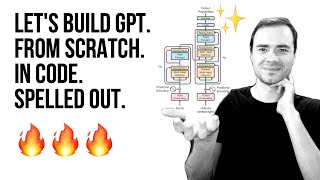
 1:56:20
 Let's build GPT: from scratch, in code, spelled out. Andrej Karpathy
6.8M views · 149.3K likes · 3 years ago
ChatGPT by OpenAI
ChatGPT is an AI chatbot by OpenAI that uses large language models (GPT-4, GPT-4o) to generate human-like text responses. It can write code, explain concepts, debug errors, draft content, and have multi-turn conversations on virtually any topic.
ChatGPT launched in November 2022 and reached 100 million users in two months — the fastest-growing app in history. It's built on the GPT series of transformer models trained on massive text datasets.
For developers, ChatGPT is a coding assistant. It can explain code, write functions, debug errors, generate regex patterns, write SQL queries, and even architect systems. The key is prompt engineering — being specific about what you want.
ChatGPT comes in free (GPT-4o mini) and paid (ChatGPT Plus with GPT-4o, o1, and canvas) tiers. The API lets developers build ChatGPT-like features into their own apps using the OpenAI SDK.
Alternatives include Claude (Anthropic), Gemini (Google), and open-source models like Llama (Meta). The competitive landscape is evolving rapidly, with each model excelling at different tasks.
Developers use ChatGPT daily for code generation, debugging, learning new technologies, writing documentation, and brainstorming architecture decisions. It's become as essential as Stack Overflow was. The API powers chatbots, content generation, and AI features in thousands of apps.
import OpenAI from 'openai';

const openai = new OpenAI();

const response = await openai.chat.completions.create({
  model: 'gpt-4o',
  messages: [
    { role: 'system', content: 'You are a helpful coding assistant.' },
    { role: 'user', content: 'Write a Python function to check if a number is prime' }
  ],
  temperature: 0.2
});

console.log(response.choices[0].message.content); 34:05
34:05  3:31:24
  18:22
18:22  8:06
8:06  14:47
14:47 
@leilagharani
Excel. Power Query. Copilot. ChatGPT. Power BI. PowerPoint. You use them every day to automate Excel and your work - s...

@openai
OpenAI’s mission is to ensure that artificial general intelligence benefits all of humanity.

@academind
There's always something to learn! We create courses and tutorials on tech-related topics since 2016! We teach develop...

@anthropic-ai
We’re an AI safety and research company. Talk to our AI assistant Claude on claude.com. Download Claude on desktop, iOS,...

@claude_developer
👇 | SUBSCRIBE to become a SIGMA Coder Σ | 👇 💻 | Sharing Daily Coding tips. 🦾 | BF of Developers and Students ⚙️ | P...

@nicksaraev
Hi 👋 I'm Nick. I make money with AI tools like N8N, Claude Code, and Antigravity—and I teach others how they can too. ...
ChatGPT has a free tier with GPT-4o mini. ChatGPT Plus ($20/month) gives access to GPT-4o, o1, and advanced features. The API charges per token used.
It can generate working code, but always review and test it. ChatGPT occasionally produces code with subtle bugs, security issues, or outdated patterns. Use it as a first draft, not a final product.
Both are AI chatbots, but they use different models and have different strengths. Claude (by Anthropic) tends to be better at long documents and coding tasks. ChatGPT has broader plugin/tool integrations. Try both.
Want a structured learning path?
Plan a ChatGPT Lesson →