 18:35
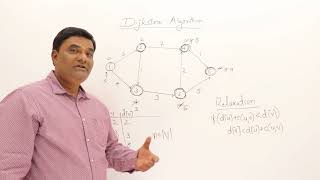
18:35 3.6 Dijkstra Algorithm - Single Source Shortest Path - Greedy Method Abdul Bari
4.6M views · 72.1K likes · 8 years ago
Binary Tree Data Structure
A binary tree is a tree where each node has at most two children (left and right). A Binary Search Tree (BST) adds ordering: left child < parent < right child, enabling O(log n) search, insertion, and deletion. Self-balancing BSTs (AVL, Red-Black) maintain O(log n) guarantees.
BST lookup: search for 7. Start at root (10). 7 < 10, go left (5). 7 > 5, go right (7). Found! Each comparison eliminates half the tree. Balanced trees guarantee O(log n); unbalanced trees degrade to O(n) — a linked list in the worst case.
18:35  36:54
36:54  48:57
48:57  8:26
8:26 
@gatesmashers
Welcome to Gate Smashers, one of the fastest-growing EdTech communities with 2.6 M+ learners. 🎓 We provide complete lec...

@neetcode
Current NEET and ex-Google SWE, also I love teaching! N.E.E.T. = (Not in education, employment or training) Preparing ...
@neuralnine
NeuralNine is an educational brand focusing on programming, machine learning and computer science in general! Let's deve...

@greghogg
Today, Greg is driven by a single mission: to help engineers master the complex technical skills required to land roles ...
Database indexes (B-trees), in-memory sorted data, priority queues (heaps), expression parsing, Huffman encoding, and many interview problems.
Want a structured learning path?
Plan a Binary Tree Lesson →