 1:56:20
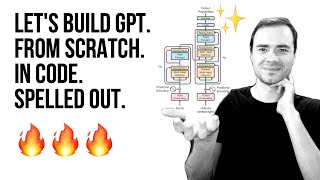
 Let's build GPT: from scratch, in code, spelled out. Andrej Karpathy
6.8M views · 149.3K likes · 3 years ago
An AI agent is a system that uses an LLM to autonomously plan, reason, and take actions to accomplish goals. Unlike simple chatbots that respond to prompts, agents can use tools, browse the web, execute code, manage files, and chain multiple steps together to complete complex tasks.
An AI agent combines an LLM (the brain), tools (the hands), and memory (the context). You say 'deploy my app to production' and the agent: reads your code, runs tests, fixes failures, builds the Docker image, pushes to the registry, and updates the deployment — all autonomously.
Examples of AI agents: Claude Code (writes and runs code), Devin (software engineering agent), AutoGPT (general-purpose), and custom agents built with LangChain, CrewAI, or the Anthropic Agent SDK. Agents are the next evolution beyond chatbots.
AI agents are transforming development workflows. They handle multi-step tasks that chatbots can't: debugging across files, implementing features, managing infrastructure, and coordinating complex workflows. Building effective agents requires understanding tool use, error handling, and guardrails.
from anthropic import Anthropic

client = Anthropic()
tools = [{
    'name': 'run_code',
    'description': 'Execute Python code',
    'input_schema': {
        'type': 'object',
        'properties': {'code': {'type': 'string'}},
        'required': ['code']
    }
}]

response = client.messages.create(
    model='claude-sonnet-4-20250514',
    max_tokens=1024,
    tools=tools,
    messages=[{'role': 'user', 'content': 'Calculate the first 20 Fibonacci numbers'}]
)
# Agent uses the run_code tool to execute Python 34:05
34:05  3:31:24
  18:22
18:22 
@leilagharani
Excel. Power Query. Copilot. ChatGPT. Power BI. PowerPoint. You use them every day to automate Excel and your work - s...

@openai
OpenAI’s mission is to ensure that artificial general intelligence benefits all of humanity.

@academind
There's always something to learn! We create courses and tutorials on tech-related topics since 2016! We teach develop...

@anthropic-ai
We’re an AI safety and research company. Talk to our AI assistant Claude on claude.com. Download Claude on desktop, iOS,...
A chatbot generates text responses. An AI agent takes actions — it can browse the web, execute code, call APIs, manage files, and chain multiple steps together. Agents are autonomous; chatbots are reactive.
Increasingly yes, but with guardrails. Use human-in-the-loop for critical actions, implement retry logic, set clear boundaries on what the agent can do, and monitor outputs. Claude Code and GitHub Copilot Workspace are production-grade agent systems.
Want a structured learning path?
Plan a AI Agent Lesson →